What’s of the Rheocasting and Thixoforming ?
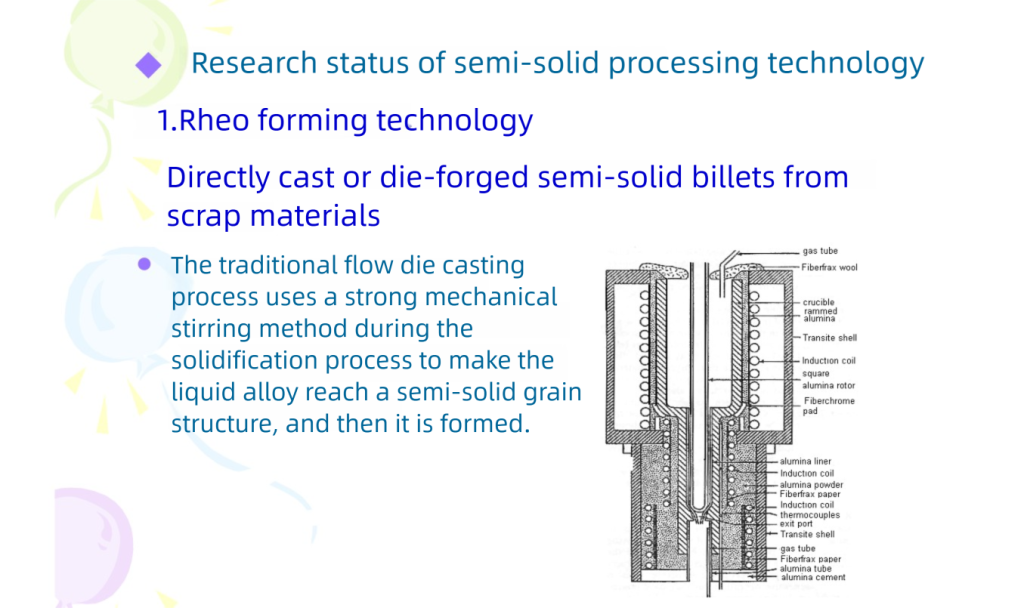
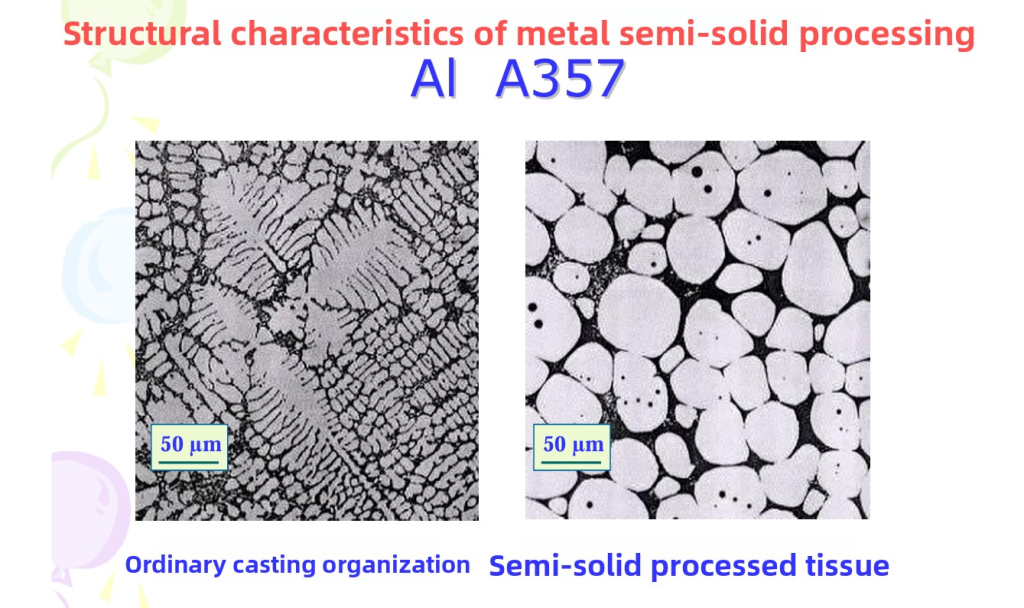
Semi-solid metal forming was first proposed by Professor Flemings of the Massachusetts Institute of Technology (MIT) in the early 1970s. The process involves subjecting the metal to vigorous stirring during solidification to break up dendrites, resulting in a solid-liquid slurry consisting of a liquid metal matrix with uniformly suspended, nearly spherical microstructural particles.
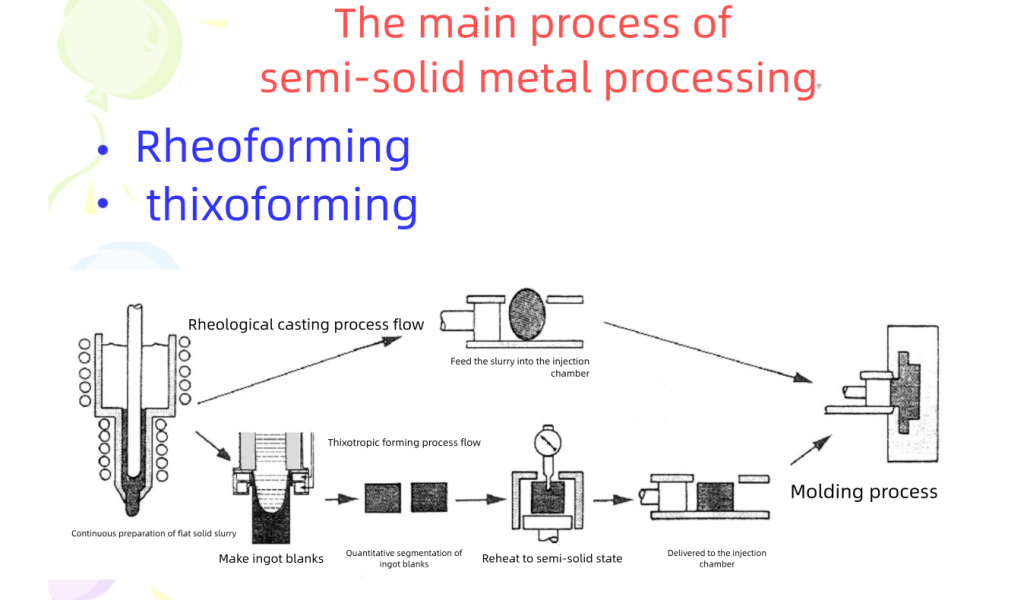
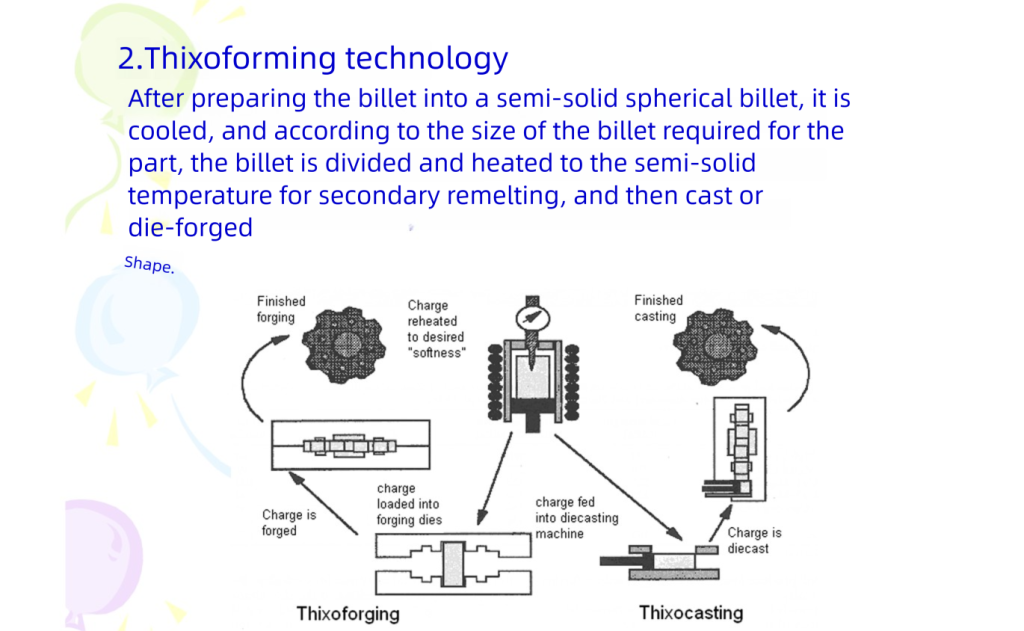
The method of directly forming this type of slurry is known as semi-solid rheoforming. In contrast, the method in which the slurry is first solidified into billets—which are then cut to size as needed and reheated to the metal’s semi-solid temperature range for forming—is known as semi-solid thixoforming.
What are the main semi-solid processing techniques?
The primary methods of semi-solid die casting include:
• Rheocasting
• Thixocasting
• Thixoforming
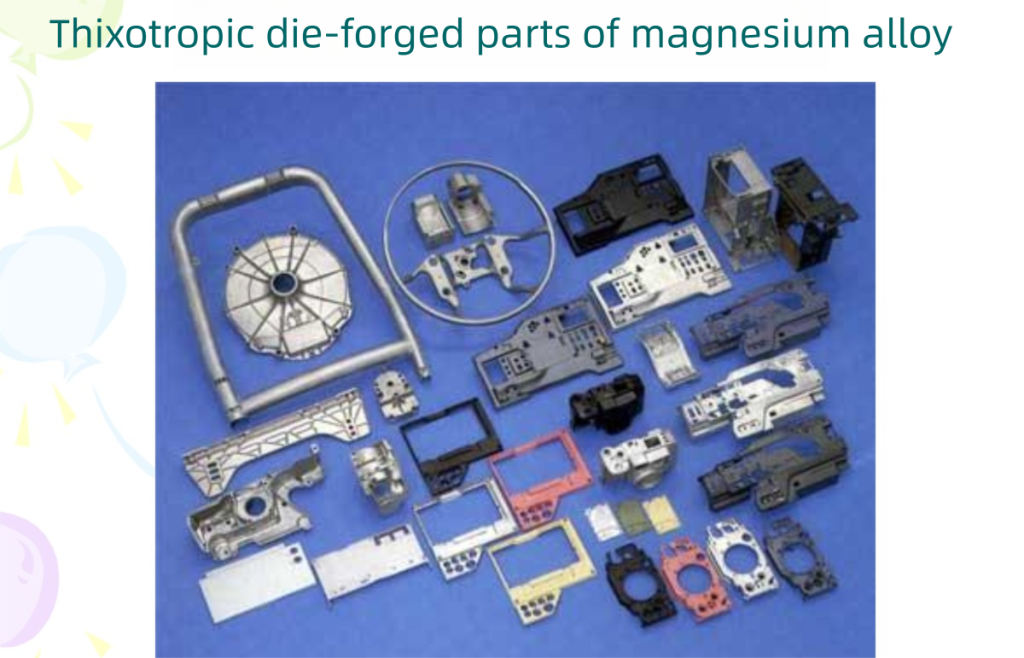
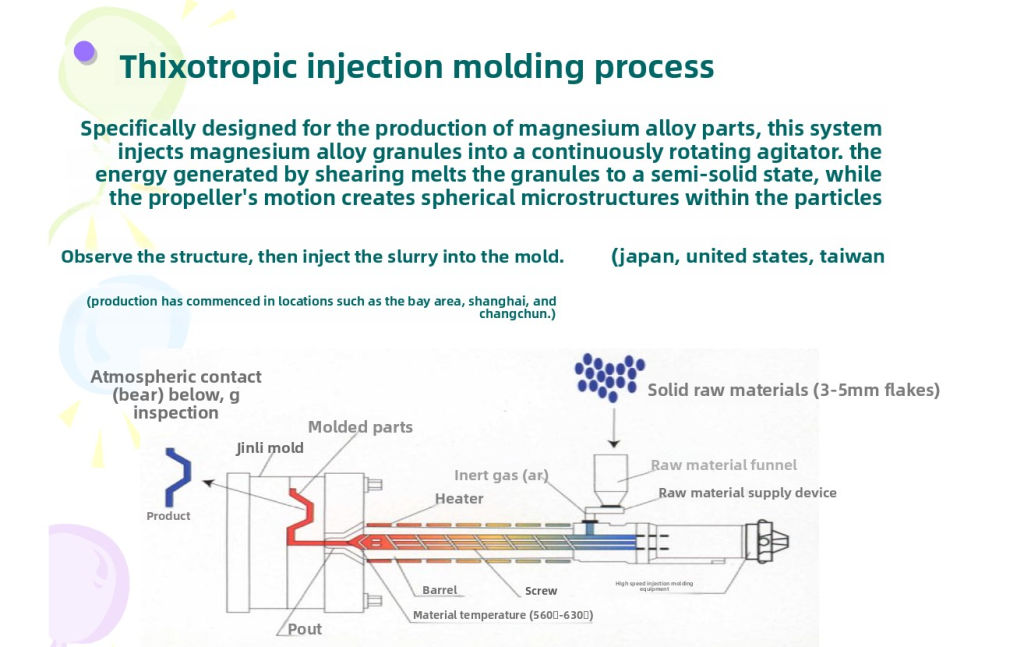
Aluminum alloy parts are predominantly manufactured using rheocasting or thixoforming processes, whereas magnesium alloy parts require the thixoforming process.
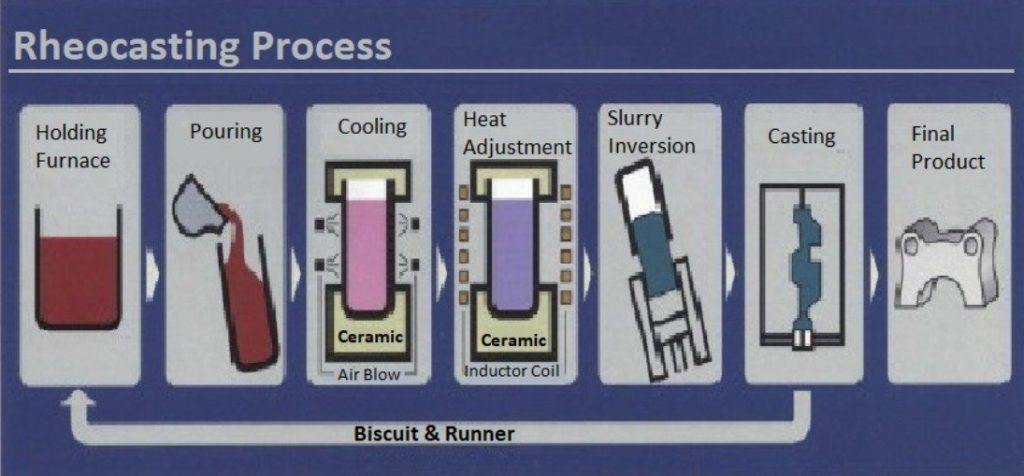
Rheocasting:
In the rheocasting process, molten metal first flows through a controlled chamber. Within this chamber, the metal is cooled to a semi-solid temperature, forming a slurry. Subsequently, a plunger forces the slurry into the mold cavity, where it solidifies to form the final component.
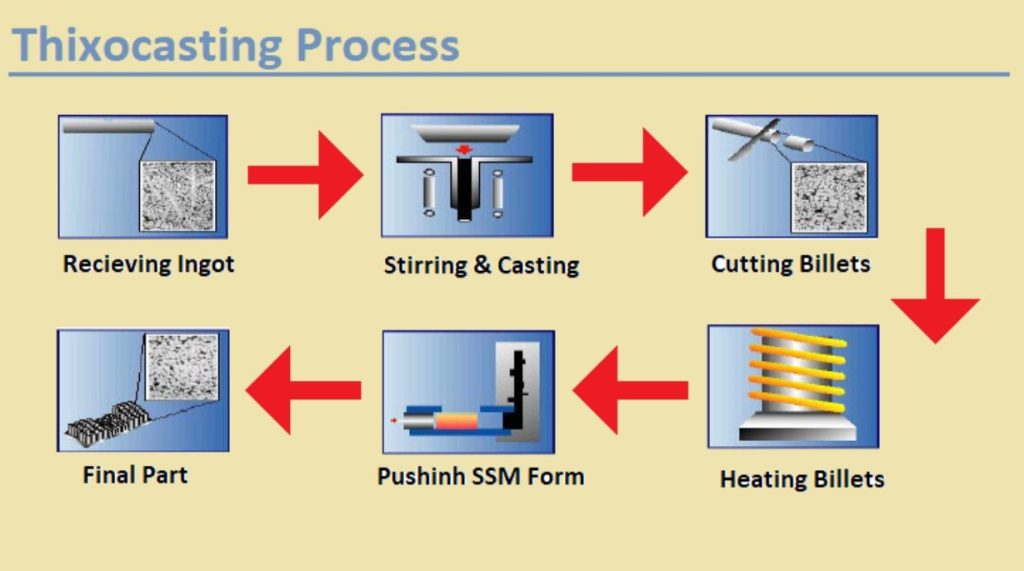
Thixocasting
In the thixocasting process, manufacturers cut solid metal rods into small billets. These billets are then heated to a semi-solid temperature to form a slurry. Finally, a plunger forces the slurry into the mold cavity.
There is a specialized preparation process for aluminum alloys used in thixocasting that involves both cold and hot working. This process is known as SIMA (Strain-Induced Melt Activation).
During this process, the metal is continuously stirred while in a semi-solid state. This causes the formation of globular structures within the semi-solid metal (slurry), resulting in a non-dendritic structure. This process is used exclusively for casting small parts
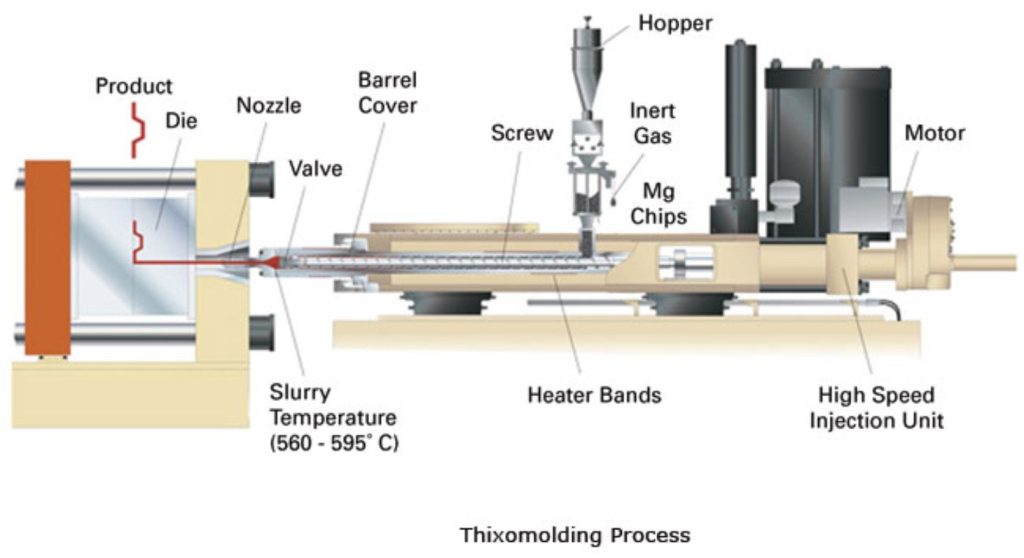
Thixomolding
In the thixomolding process, sufficient heat is applied to the magnesium chips in the barrel to raise them to a semi-solid temperature and transform them into a slurry.
A screw conveyor then forces the slurry into the mold cavity. During this injection phase, the screw rotates, imparting shear force to the slurry; this shear force generates the spherical microstructure characteristic of SSM (Semi-Solid Metal) casting.
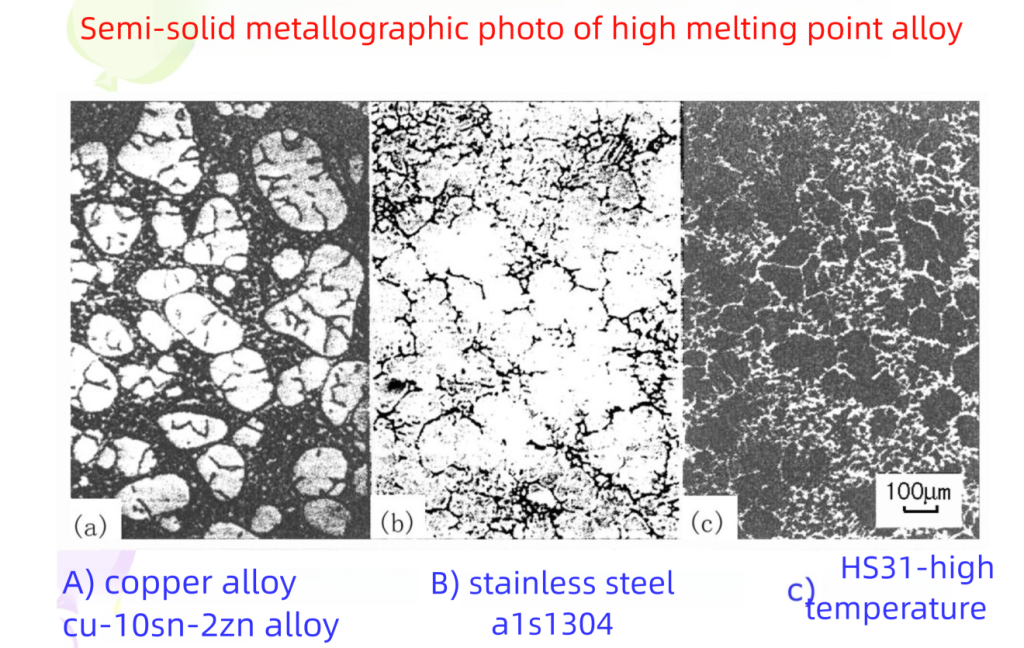
Characteristics of the metallic microstructure of semi-solid products
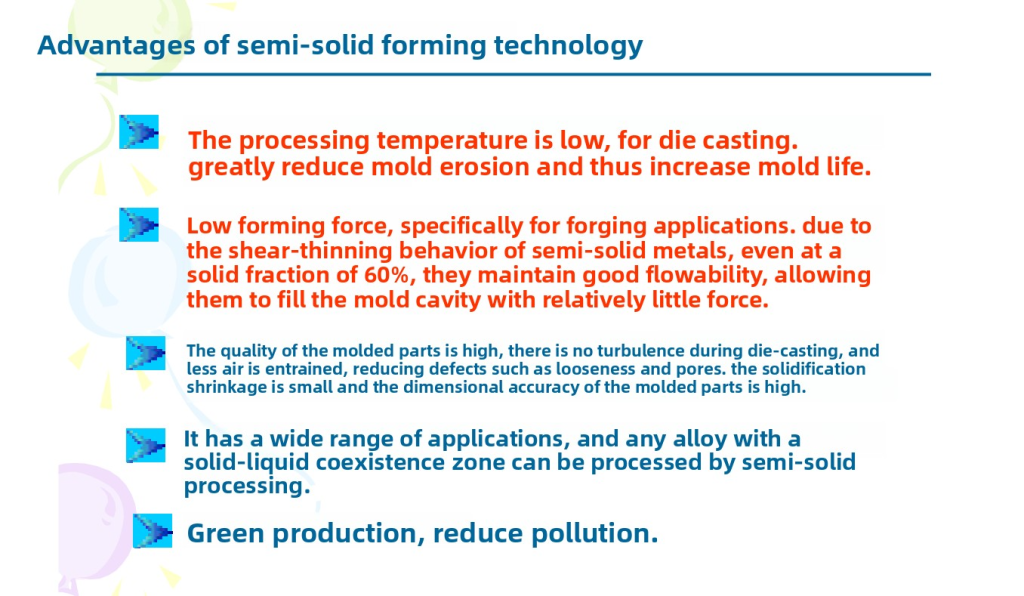
What are the advantages of semi-solid processing technology?
Video Overview of the Semi-Solid Product Production Site and Process
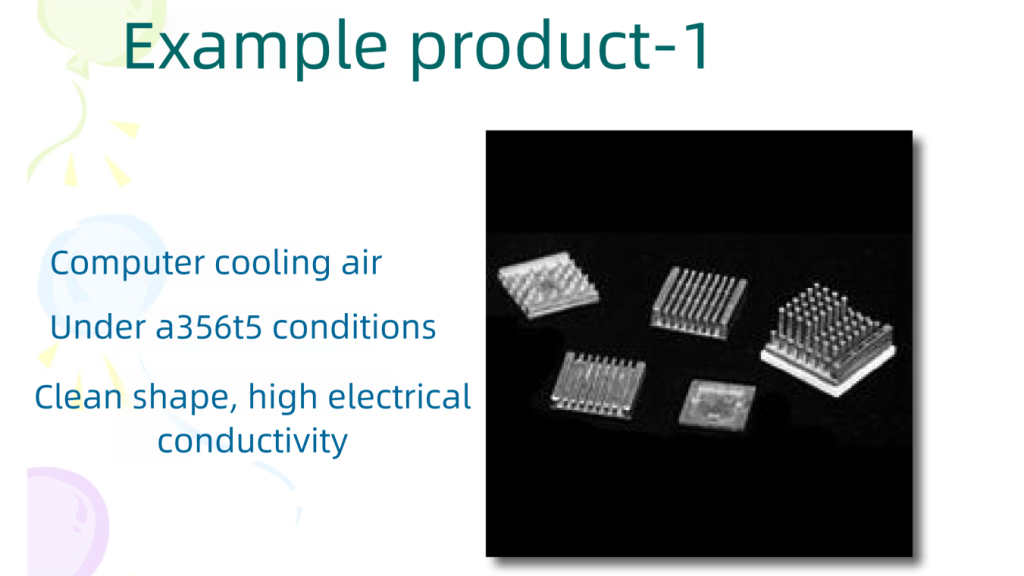
Examples of typical products manufactured using semi-solid processing technology across various fields
I. Consumer electronics
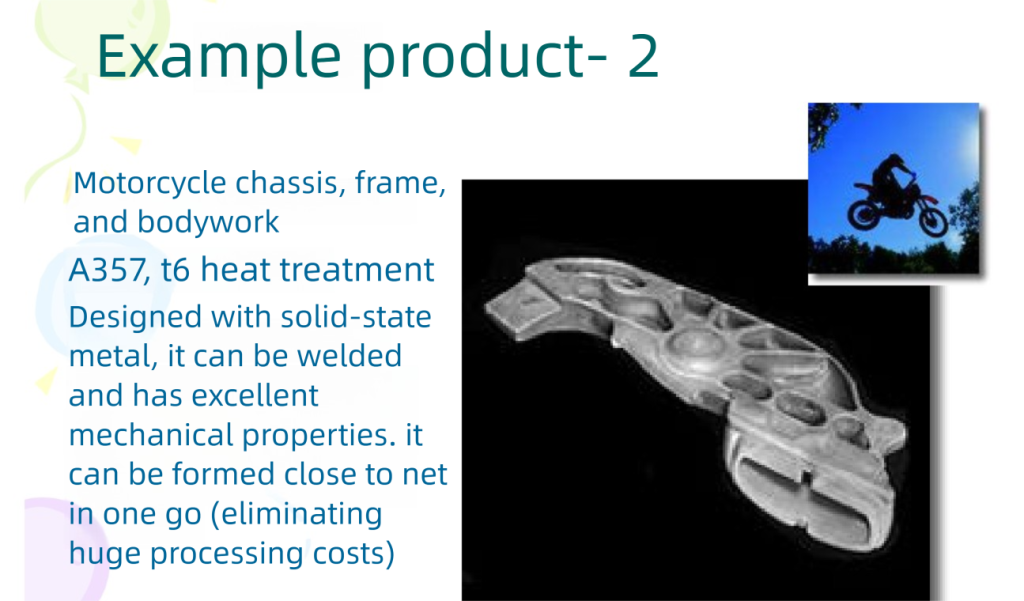
II. Motorcycle chassis, frames, and housing components
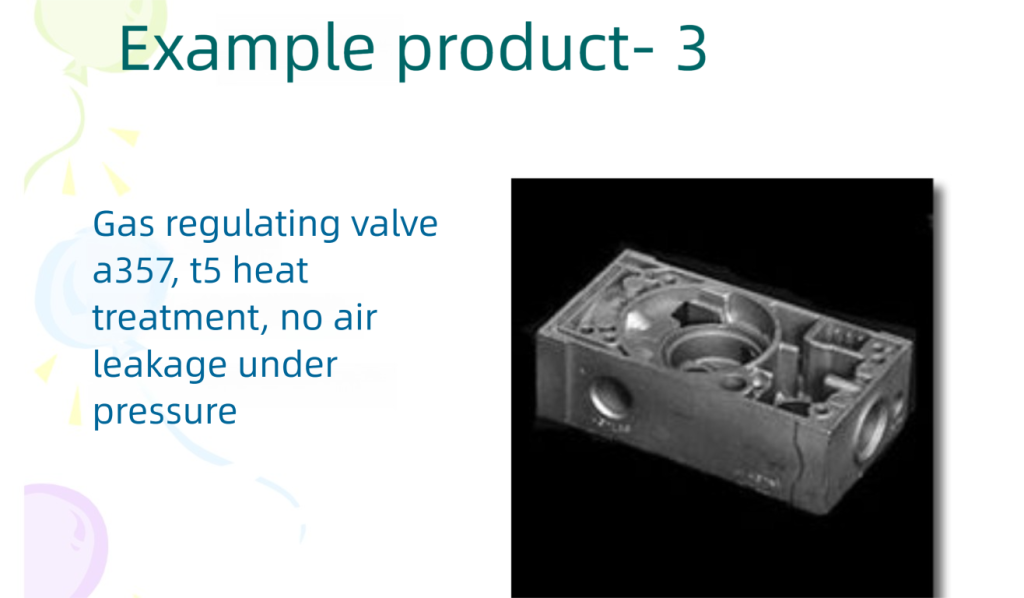
III. Gas control valves
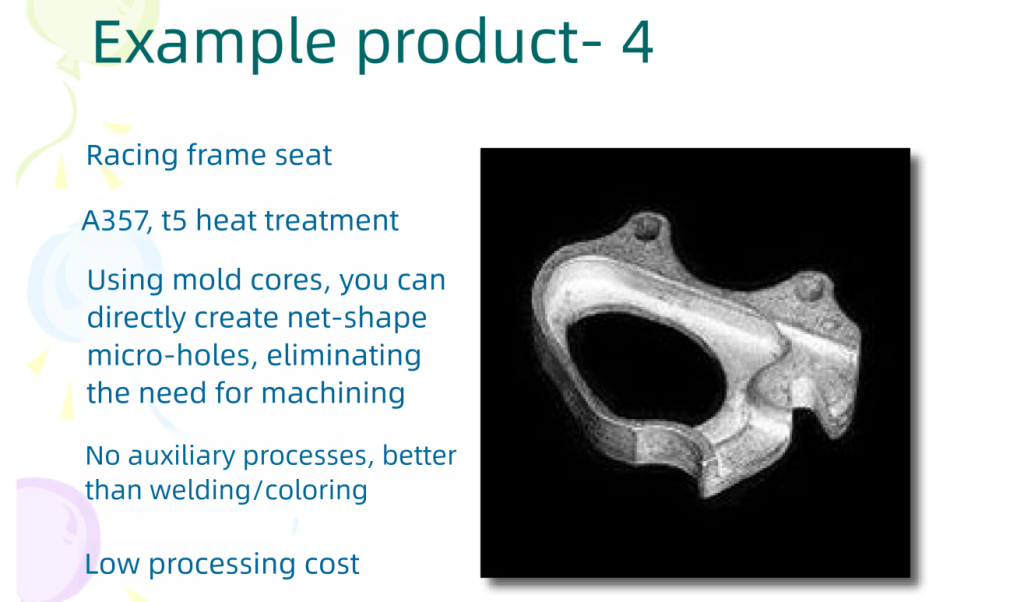
IV. Racing car frames and mounting brackets
V. Examples of Other Applications